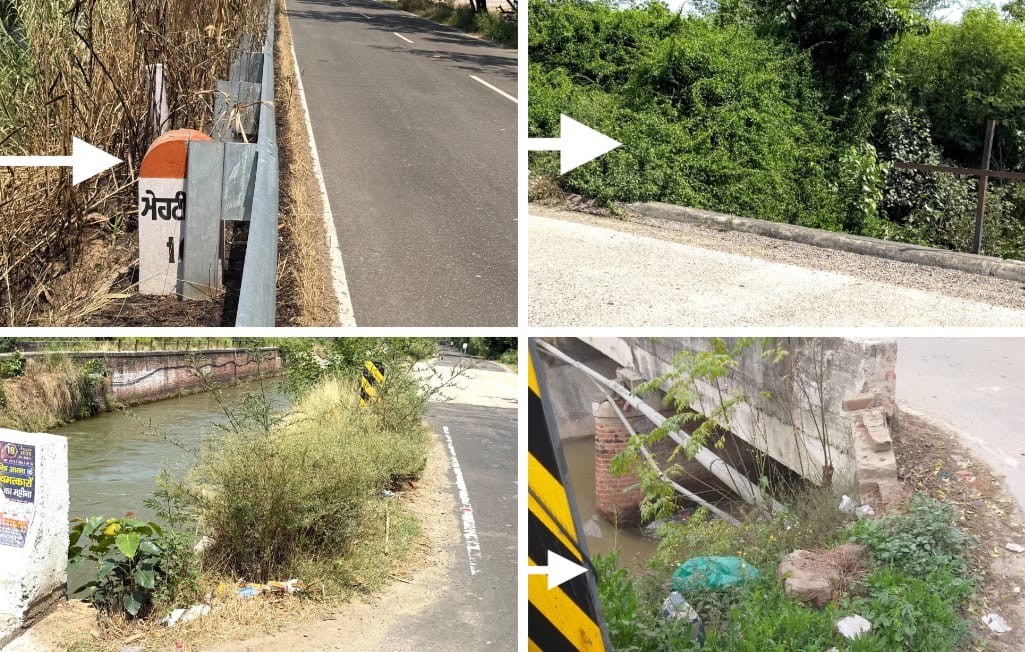
Bist Doab Canals Decay Raises Safety, Environmental Alarms: Labour Party Sounds Warning
Hoshiarpur /Daljeet Ajnoha/June 1
Bist Doab Canal’s Decay Raises Safety, Environmental Alarms: Labour Party Sounds Warning
Hoshiarpur /Daljeet Ajnoha/June 1
— Once a lifeline for Doaba’s agriculture and groundwater recharge, the Bist Doab canal constructed around 1952 is now in a state of progressive disrepair, raising safety and environmental concerns across four districts, Labour Party leaders said on Monday. Local party representatives accused successive administrations and corrupt practices of allowing the canal’s infrastructure and surrounding ecology to deteriorate, turning previously safe irrigation corridors into potential death traps.
The canal, which originally supplied irrigation to an estimated 1,55,085 hectares across Nawanshahr (now Shahid Bhagat Singh Nagar), Hoshiarpur, Jalandhar and Kapurthala, was built with robust headworks at Ropar and along the banks of the Sutlej to stabilise groundwater and sustain the region’s fertility. Over the past seven decades, however, party leaders claim, negligence and hollow development have reversed much of that legacy.
Labour Party state president Jay Gopal Dhiman, accompanied by office-bearers Lahinber Singh and Jaswinder Kumar, harshly criticised the present management of the canal, highlighting a collapse in routine maintenance, staff shortages and an erosion of public safety measures. “When the canal banks were served by local belt-dars (maintenance staff) and the adjacent roads were unpaved, the canal was well looked after,” Dhiman said. “There were protective embankments, safety ramps, colourful security grilles on every ghatt and bridge, and clear hazard signage. Those safeguards are disappearing.”
According to Dhiman, the system of regular maintenance that once kept weeds and encroachments at bay has been weakened by what he described as “corrupt practices and hollow, short-sighted development.” He alleged that millions of rupees meant for canal renovation were misused, while essential upkeep — including repainting and repairing security grilles — has been ignored. “Today, the grilles that once guarded crossings and ghats have been stolen or removed, making these spots a danger to people, especially children and livestock,” he added.
Local residents and activists corroborate many of these claims: abandoned rest houses, overgrown margins, illegal encroachments and unmanaged waste have become common along stretches that were once green and neatly maintained. The loss of riverside vegetation, the leaders said, has affected local health and ecology, while unlawful occupation of canal lands allegedly under political patronage continues unchecked.
Dhiman warned that staff shortages, especially among maintenance and beldari teams, have exacerbated the problem. “It seems the ethics of public service have been traded for shortcuts and profit,” he said. “If hollow development continues, the damage will be irreversible and the people will pay the price.”
The Labour Party called on citizens, local authorities and the state government to mount an immediate, transparent inspection and rehabilitation drive. Their demands include restoring the cadre of maintenance workers, refitting and securing safety grilles and signage, clearing illegal encroachments, replanting riparian vegetation, and setting up local monitoring committees involving farmers and residents.
Experts note that neglect of irrigation infrastructure not only threatens human safety but also undermines water security and crop yields in a region heavily dependent on canal irrigation. Properly maintained canals play a crucial role in groundwater recharge; their degradation could therefore worsen water stress in the Doaba belt.
The party urged a public awareness campaign to enlist local communities in safeguarding the canal and to pressurise authorities for accountability. “People once took pride in what was built in their country and protected it,” Dhiman said. “We must revive that spirit before it’s too late.”
Officials at the state irrigation department did not immediately respond to requests for comment. Farmers and residents in affected districts say they will pursue legal and civic channels if remedial action is not initiated quickly.