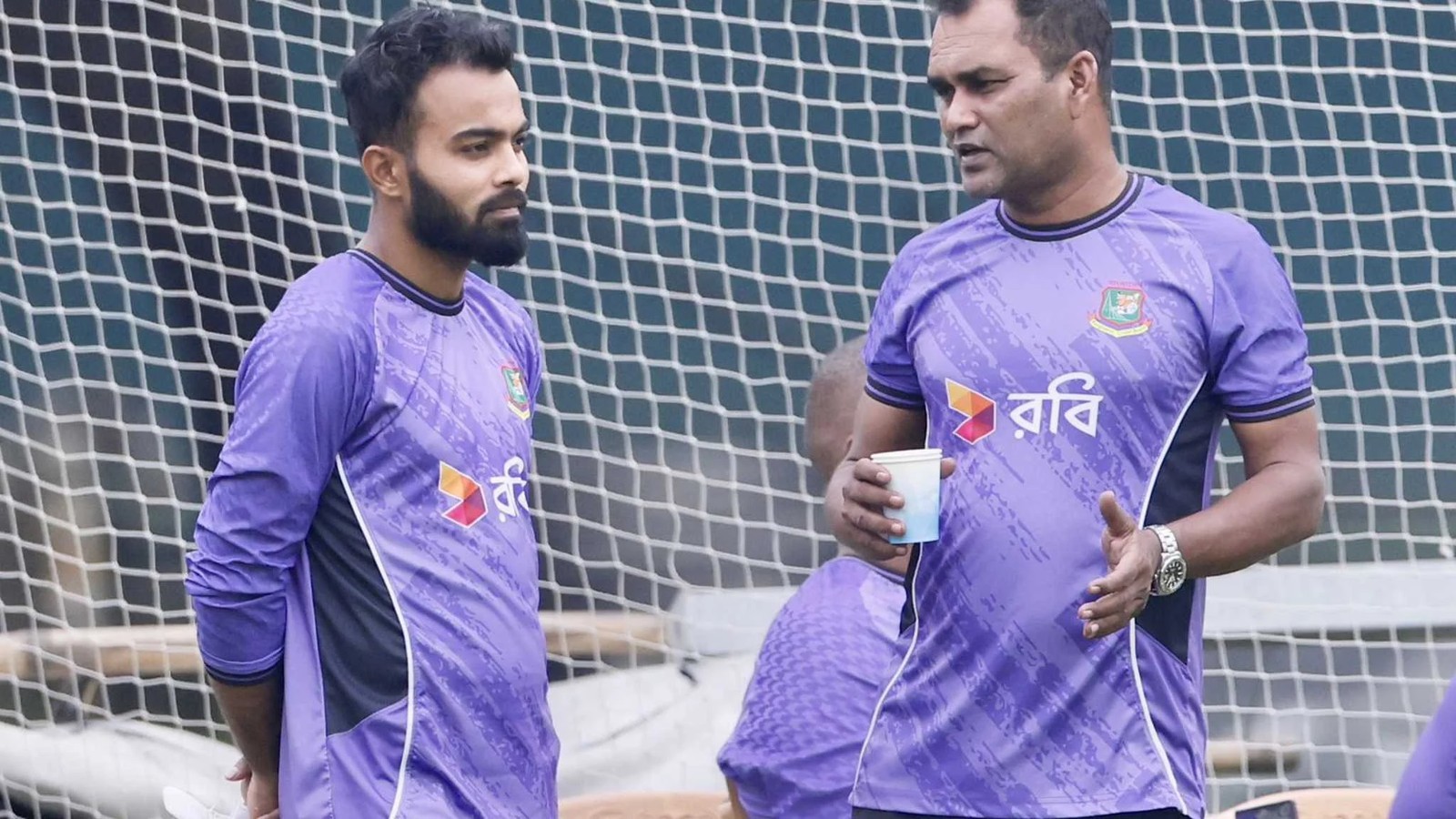
Salahuddin Exit Turns Bangladesh Cricket Into A Bigger Dressing-Room Culture Debate
Bangladesh cricket ki is kahani mein... Mohammad Salahuddin ka exit sirf ek resignation note nahi lagta. Yeh ek aisi awaaz hai, jo dressing room ke andar ki khamoshi ko bahar laati hai. Pakistan ke khilaaf two-Test series ke baad, jab Bangladesh camp mein Test win ki khushi thi, players ke chehron par muskaan thi, aur ek lambi mehnat ke baad dressing room mein sukoon tha... usi waqt Mohammad Salahuddin ne senior national team se apna safar khatm kiya. Lekin unhone yeh bhi saaf kar diya ki yeh faisla kisi report, kisi supporter noise, ya bahar ki speculation ki wajah se nahi tha. Yeh unka personal protest tha. Unka dard is baat par tha ki agar board sach jaanta hai, agar board ko pata hai ki dressing room mein decisions collective hote hain, toh phir false news aur pressure ke saamne employees, coaches aur players ko protection kyun nahi milti? Salahuddin ke words mein kahani ka asli bhaar yahin hai. Woh senior assistant coach the, head coach nahi. Unka role communication bridge ka tha... foreign coaches aur Bangladesh players ke beech language, culture, ideas aur expectations ko clear karna. Kabhi coaches ki baat players tak pahunchani, kabhi players ki baat coaches ko samjhani. Bahar se logon ne shayad unhe selection, captaincy aur team decisions ka center samjha, lekin Salahuddin ne bataya ki decisions head coach, captain, leadership group aur coaching staff ke collective process se aate the. Jaker Ali ke captaincy talks se lekar net planning tak, unka kehna tha ki kisi ek aadmi ke haath mein Bangladesh team ka remote control nahi tha... kyunki national team koi club side nahi hoti. Phir aaya emotional culture ka chapter. Salahuddin ne kaha ki Bengali cricket culture emotions mein bahut jaldi upar neeche hota hai. Win ke baad over excitement, failure ke baad long depression... aur yahi habit team atmosphere ko damage kar sakti hai. Unke hisaab se ek sportsman ko failure ko sirf kuch minutes tak feel karke aage badhna seekhna hota hai. Pehle agar koi player runs nahi banata tha, toh woh poora din corner mein baith jaata tha. Ab dressing room mein yeh culture improve ho raha hai. Yeh baat chhoti nahi hai. Yeh Bangladesh cricket ke future ka foundation hai. Salahuddin ne favoritism ke allegations ko bhi strongly deny kiya. Najmul Hossain Shanto, Litton Das, Mehidy Hasan... in naamon ke beech jo narratives banaye gaye, unhe unhone painful aur wrong bataya. Unka kehna tha ki coaching staff revenge-taking type nahi tha. Players ko bolne ki freedom thi. Agar kisi ko role, culture, ya communication mein problem lagti thi, toh woh directly baat kar sakta tha. Tamim Iqbal aur Shakib Al Hasan ke saath relationship speculation par bhi Salahuddin ne seedha jawab diya. Unhone kaha dislike ki baat galat hai. Hurt feelings ho sakti hain, lekin dislike alag cheez hai. Tamim Iqbal ne unhe national team mein rehne ka option diya tha, lekin saath hi High Performance unit mein jaakar Bangladesh ke pipeline ko stronger banane ka positive idea bhi diya. Salahuddin ne is offer ko coaching life ka ek meaningful stage maana. Unka focus ab lower levels par raw talent ko shape karna hai, jahan shayad Bangladesh cricket ke liye bigger change create ho sakta hai. Is kahani ka ending resignation se nahi hota... yeh ek warning ke saath khatm hota hai. Agar board apne players aur coaches ko false pressure se protect nahi karega, toh talent sirf performance pressure se nahi, culture pressure se bhi toot sakta hai. Mohammad Salahuddin national dressing room se bahar aa gaye hain, lekin unka message Bangladesh cricket ke andar bahut der tak ghoomega. Aap sun rahe the Guru News Network, powered by द गुरु ज्ञान... jahan cricket news sirf update nahi, ek complete story ban kar aap tak pahunchti hai. Latest cricket intelligence, trusted analysis aur fastest live line ke liye द गुरु ज्ञान ke official platforms par connected rahiye... kyunki cricket ko samajhna bhi ek kala hai, aur द गुरु ज्ञान us kala ko aur zyada zinda banata hai.
Mohammad Salahuddin's farewell from the Bangladesh senior national team is not the story of a coach quietly leaving one chair for another. It is the story of a man stepping away with a message heavy enough to echo beyond one dressing room. After Bangladesh completed the two-Test series against Pakistan, Salahuddin signed off from the senior setup and moved toward a new responsibility as head of the High Performance unit. On paper, it looks like a structural reshuffle. In reality, it carries the weight of protest, protection, culture, and the deeper machinery of Bangladesh cricket. Salahuddin made one thing clear: he did not resign because of media reports or supporter criticism. His decision, as he framed it, was personal protest. His frustration came from the feeling that players, coaches, and officials are not always protected when false narratives gather speed. In his view, if the board knows a story is wrong, the board should stand up, calmly and clearly, before pressure starts breaking people from the inside. That is the heart of this episode. Not ego. Not drama. Not a fight for power. A demand for institutional protection. His explanation also challenged the public perception that he controlled the national team from behind the curtain. Salahuddin described himself as the senior assistant coach, not the head coach. His main work was to serve as a bridge between Bangladesh's players and the foreign coaching staff. He translated more than language. He translated culture, expectations, discomfort, ideas, and cricketing intent. Sometimes he explained what the players needed. Sometimes he helped the coaches' messages land more clearly. It was unseen work, but in a dressing room, unseen work often decides whether a team breathes freely or suffocates quietly. He also pushed back against the belief that selection, captaincy, and team decisions sat in his hands. According to him, the head coach, the captain, the leadership group, the players, and the coaching staff all worked within a collective process. Discussions around Jaker Ali's captaincy existed, but those were not personal decisions made by one individual. Bangladesh is a national side, not a private club, and Salahuddin wanted that distinction understood. He spoke with equal seriousness about emotional control inside the team environment. In his assessment, Bengali cricket culture has often moved too quickly between emotional highs and emotional lows. A win should be enjoyed, but not worshipped. A failure should hurt, but not imprison a player for days. Earlier, a player who failed might sit alone in a corner for an entire day. Now, Salahuddin believes those habits are improving. And that may be one of the most important pieces of this interview, because culture is not built in press conferences. It is built in how a dressing room treats a player ten minutes after failure. He also rejected allegations of favoritism involving Najmul Hossain Shanto, Litton Das, and Mehidy Hasan. The suggestion hurt him, but he maintained that the coaching staff never worked with that mindset. He said players were given freedom to speak, challenge roles, discuss culture, and approach coaches without fear. In his version of the dressing room, this was not a revenge-taking coaching setup. It was a group trying to build communication, even if the outside world preferred a louder and simpler story. Then came the Tamim Iqbal and Shakib Al Hasan angle. Salahuddin dismissed the idea that personal dislike shaped his move away from the national team. Hurt feelings, he said, can exist, but dislike is a different matter. His account of Tamim Iqbal was notably respectful. Tamim, now positioned as a key decision-maker, did not push him out. Instead, he offered him the choice to remain with the national team or move down to strengthen the player pipeline. Salahuddin viewed the High Performance role as a rare coaching opportunity: a chance to work with raw material, shape young players, and possibly influence Bangladesh cricket more deeply than he could by changing five percent at the senior level. That is why this departure matters. Salahuddin is not disappearing from Bangladesh cricket. He is moving closer to its roots. He leaves the national dressing room after a Test win, but his final message is less about victory and more about responsibility. Protect the players. Protect the workers. Build emotional maturity. Do not let false pressure turn national assets into broken individuals. It is a sharp, uncomfortable, necessary reminder. Thank you for listening to Guru News Network, powered by The Guru Gyan... where cricket news is not reduced to noise, headlines, and hollow outrage. For trusted cricket updates, intelligent match context, fastest live line, and deeper cricket storytelling, stay connected with The Guru Gyan, because the game deserves analysis with clarity, character, and just enough fire to keep the truth awake.
Bangladesh Cricket
Coaching Exit
Pakistan Tour Of Bangladesh 2026
Guru News Network
Salahuddin exit turns Bangladesh cricket into a bigger dressing-room culture debate
Mohammad Salahuddin ne Bangladesh senior national team se sign off karte hue apne resignation ko media reports ka result nahi, balki personal protest bataya. Ab unka next role High Performance unit ke head ke roop me Bangladesh ke player pipeline ko strengthen karna hoga.
Mohammad Salahuddin ka national-team exit Bangladesh cricket ke dressing-room culture, communication aur player protection par ek serious debate khol raha hai.
News Highlights
- Mohammad Salahuddin ne Bangladesh senior national team se Pakistan ke against two-Test series ke baad sign off kiya.
- Salahuddin ab Bangladesh ke High Performance unit ke head ke roop me player pipeline ko strengthen karenge.
- Unhone clarify kiya ki resignation media reports ya supporter reaction ki wajah se nahi, balki personal protest tha.
- Senior assistant coach ke roop me unka main role players aur foreign coaches ke beech communication bridge banana tha.
- Unhone favoritism, excessive decision-making influence aur Tamim Iqbal relationship speculation se jude narratives ko strongly reject kiya.
Main Story: Salahuddin ka exit sirf role change nahi, ek message bhi hai
Bangladesh senior assistant coach Mohammad Salahuddin ne Pakistan ke against two-Test series ke conclusion ke baad senior national team se apna phase complete kar diya. Surface par ye ek coaching transition lag sakta hai, lekin unke detailed comments ne is move ko Bangladesh cricket ke internal culture aur institutional protection ki larger conversation me badal diya.
Salahuddin ab High Performance unit ke head ke roop me kaam karenge. Is role ka core objective Bangladesh ke next-generation players ko better system, coaching support aur clearer development pathway dena hoga.
Unhone apni resignation reasoning ko direct words me explain kiya: ye reports ke pressure ka result nahi tha. Unke according, ye personal protest tha, especially is baat par ki false news ya outside pressure ke time players, coaches aur employees ko board-level protection milni chahiye.
Player, Team And Role Context
Coach
Mohammad Salahuddin
Previous Role
Bangladesh senior assistant coach
Next Role
Head of High Performance unit
Team
Bangladesh
Series Context
Pakistan tour of Bangladesh, 2026
Core Issue
Personal protest and player protection
Last Day In Dressing Room: Test win ka alag emotion
Salahuddin ne apne last day ko positive emotional setting me describe kiya. Bangladesh ne Test match jeeta tha, aur unke liye five-day effort ke baad Test victory ka joy naturally different hota hai. Players good mood me the, dressing room me smiles thi, aur team home return karte waqt better space me dikh rahi thi.
Is backdrop ne unke exit ko aur layered bana diya. Ek taraf Test win ki energy thi, doosri taraf ek senior coach ka woh decision tha jo sirf professional movement nahi, cricket culture par statement bhi tha. Sport bhi ajeeb cheez hai, ek hi room me celebration aur protest dono ko chair de deta hai.
Key Turning Point: Resignation ka reason reports nahi, protection culture tha
Salahuddin ka strongest point yahi tha ki unhone resignation external reports ya fan criticism ke pressure me nahi diya. Unka concern tha ki jab board ko reality pata ho, tab false narratives ke against players aur staff ko openly ya internally reassurance milna chahiye.
"My resignation was out of personal protest."
Mohammad Salahuddin
Unka argument simple lekin important tha: player board ka asset hota hai. Uske development par investment hota hai. Agar media pressure, supporter abuse ya false news se player mentally break hota hai, toh usse recover karna difficult ho jata hai.
Is point me Bangladesh cricket ke liye broader warning chhupi hai. National players aur coaches ko accountability se bachana alag baat hai, lekin false pressure se protect karna professional system ka basic duty hai.
Salahuddin ne apne role ko dressing room communication, cultural clarity aur coaching alignment ke around define kiya.
His Role: Decision-maker nahi, communication bridge
Senior assistant coach ke roop me Salahuddin ne apni role clarity par special emphasis diya. Unhone kaha ki woh head coach nahi the, aur team decisions ya selection unke individual control me nahi the.
Unke according, unki do major responsibilities thi: players aur foreign coaches ke beech communication easier banana, aur cultural or language gaps ko reduce karna. Bangladesh players ki needs foreign coaching staff tak clearly pahunchana, aur coaches ke ideas players ko understandable form me explain karna unka key contribution tha.
Public perception me unhe kai baar zyada powerful figure ke roop me dekha gaya, because woh players aur coaches ke saath long discussions me involved rehte the. Lekin Salahuddin ne insist kiya ki net-planning aur communication visible hone ka matlab ye nahi ki poora system unke control me tha.
Leadership And Selection Narratives: Collective process par emphasis
Salahuddin ne team decisions ke process ko collective bataya. Head coach, captain, leadership group, players aur coaching staff sab involved the. Unhone ye bhi kaha ki head coach players aur coaches ko freedom dete the, aur meetings me kai baar players ko khud bolne diya jata tha.
Jaker Ali ke captaincy talks ka mention bhi isi context me aaya. Salahuddin ka point tha ki national team me kisi ko captain banana ek individual personal decision nahi ho sakta. Board ko answers pata hote hain, aur country-level decision club-team style me nahi liya ja sakta.
Ye clarification Bangladesh cricket ke us narrative ko challenge karta hai jisme unhe behind-the-scenes power center ke roop me paint kiya gaya. Unke words ka broader takeaway yahi hai: dressing room ke dynamics bahar se jitne simple dikhte hain, andar utne spreadsheet-friendly nahi hote.
Emotional Culture: Salahuddin ne Bangladesh team ke growth area ko highlight kiya
Salahuddin ne emotional control ko Bangladesh cricket ke important cultural development area ke roop me identify kiya. Unke view me players aur supporters dono emotions me very quickly up-down ho jaate hain, jo long-term performance environment ke liye healthy nahi hota.
Unhone explain kiya ki sportsman ke liye win ke baad emotions ko extreme high par rakhna, ya failure ko multiple matches tak carry karna, dono damaging ho sakte hain. Failure sport ka natural part hai, lekin usse quickly shake off karke move forward karna elite habit hoti hai.
Earlier phase me agar koi player fail karta tha toh poora din dressing room ke corner me baith jata tha. Salahuddin ke according, ab ye areas improve ho rahe hain. Agar ye emotional reset culture develop hota hai, Bangladesh team ka overall atmosphere stronger ban sakta hai.
Favouritism Allegations: Shanto, Litton aur Mehidy narrative par clear denial
Salahuddin ne Najmul Hossain Shanto aur Litton Das ko allegedly zyada back karne, aur Mehidy Hasan jaise players ke comparison me partiality dikhane ke allegations ko completely wrong bataya. Unhone accept kiya ki is tarah ka narrative sunna painful tha, lekin unka stance clear raha: coaching staff ne team improvement ko personal preference se upar rakha.
Unke according, current coaching group communication ke matter me strong tha. Players kisi bhi coach ke paas approach kar sakte the. Meetings me bhi players ko role, culture ya communication ke concerns directly raise karne ki freedom thi.
Unhone coaching staff ko revenge-taking group ke opposite describe kiya. In simple terms, agar player disagree karta tha, toh usse punish karne wali thinking nahi thi. Ye claim Bangladesh dressing room culture ke improvement angle ko reinforce karta hai.
High Performance unit me Salahuddin ka next phase Bangladesh cricket ke young talent pipeline ke liye important ho sakta hai.
Tamim Iqbal And Shakib Al Hasan Speculation: Salahuddin ne kya kaha?
Speculation ye bhi thi ki Tamim Iqbal ke saath relationship ne Salahuddin ke national setup se move ko influence kiya. Salahuddin ne is angle ko reject kiya. Unhone kaha ki Tamim ya Shakib Al Hasan unhe dislike karte hain, ye idea incorrect aur irresponsible hai.
Unke words me hurt feelings aur dislike alag cheezein hoti hain. Tamim Iqbal ne unhe national team me rehne ka option diya tha, saath hi ye bhi suggest kiya tha ki lower levels par kaam karke Bangladesh ke pipeline ko stronger banaya ja sakta hai.
Salahuddin ne High Performance role ko positive coaching opportunity ke roop me dekha. Unka logic practical tha: senior national team me ab shayad limited percentage change possible ho, lekin lower levels par raw talent ko shape karke Bangladesh cricket me bigger impact create kiya ja sakta hai.
Tactical And System Analysis: HP role Bangladesh ke liye kyun important hai?
Pipeline development ka core phase
High Performance unit ka role senior team ke neeche talent bridge create karna hota hai. Agar Salahuddin young players ko technical clarity, emotional maturity aur national-team readiness de paate hain, toh Bangladesh ke long-term structure ko real value mil sakti hai.
Communication culture ka transfer
National setup me unki key strength communication thi. Agar wahi strength HP environment me apply hoti hai, toh emerging players foreign coaching language, tactical messaging aur pressure situations ko early stage par better understand kar sakte hain.
Senior team ka indirect gain
Strong HP system ka direct result senior team ko milta hai. Better-prepared players jab national squad me enter karte hain, toh transition smoother hota hai. Bangladesh cricket ko yahi continuity chahiye, warna talent ke naam par annual panic festival organize hota rahega.
Why this news matters
Mohammad Salahuddin ka move Bangladesh cricket ke liye ek normal staff reshuffle se zyada meaningful hai. Is story me resignation, personal protest, player protection, emotional maturity, coaching communication aur development pipeline sab ek saath connected hain.
Bangladesh cricket ka bigger challenge sirf players produce karna nahi hai. Challenge hai un players ko protect karna, stabilize karna, aur ek aisa environment dena jahan failure ke baad bhi growth possible rahe. Salahuddin ki comments isi uncomfortable but necessary area ko touch karti hain.
For fans, ye update ek reminder hai ki dressing rooms sirf tactics se nahi chalte. Trust, communication, emotional balance aur institutional support bhi utne hi important hote hain. Scoreboard sirf result dikhata hai, system ki health nahi.
GNN And The Guru Gyan Angle
Guru News Network (GNN), powered by The Guru Gyan , is development ko Bangladesh cricket ke internal culture and development architecture ke perspective se important maanta hai. Salahuddin ka exit national-team role se zaroor hai, lekin unka next assignment Bangladesh ke future player pipeline par direct impact daal sakta hai.
GNN ke view me is story ka sharpest angle resignation nahi, balki woh message hai jo Salahuddin ne player protection aur false narratives ke against system response par diya. Modern cricket me mental stability aur trust-based communication luxury nahi, core performance tools hain.
Readers latest cricket news, coaching updates aur deeper match context ke liye Guru News Network follow kar sakte hain. Cricket intelligence aur detailed coverage ke liye The Guru Gyan official destination hai, while fast live match movement ke liye The Guru Gyan Live Line available hai.
Related Topics
Bangladesh
Pakistan tour of Bangladesh, 2026
Mohammad Salahuddin
Bangladesh Cricket Board
High Performance Unit
Tamim Iqbal
Shakib Al Hasan
Stay Ahead With Guru News Network
Cricket news ko sirf headline ke level par nahi, context ke saath samajhna hai toh GNN aur The Guru Gyan par connected rahiye. Yahan updates fast hote hain, lekin analysis bina hawa-bazi ke hota hai, jo frankly internet par rare species ban chuka hai.
Read More On GNN
Visit The Guru Gyan
Official Transparency and Trust Disclaimer
Content Authenticity: This original content is exclusively authored and published by The Guru Gyan. To maintain search engine integrity and avoid content duplication, this article originally appeared on our official portal at https://thegurugyan.com/cricket-news/ .
Strict Anti-Gambling Policy: The Guru Gyan is a platform dedicated to cricket match intelligence and analytics. We strictly DO NOT support, promote, or encourage any form of betting, gambling, or illegal activities.
Beware of Impersonators: We prioritize our users' digital safety. The Guru Gyan does not operate any official Telegram channel or group. Please rely only on our verified domains for authentic information: https://thegurugyan.com and https://live.thegurugyan.com .
Contact Our Core Team: For genuine business inquiries, feedback, or support, reach out directly to Aakash Rai at +91 9826913203 or +91 9111191152.