Unpredictable eruptions, ash inhalation: What hikers need to know about active volcanoes
Unpredictable eruptions, ash inhalation: What hikers need to know about active volcanoes
While expeditions to active volcanoes come with risks, experts say informed preparation can make the difference.
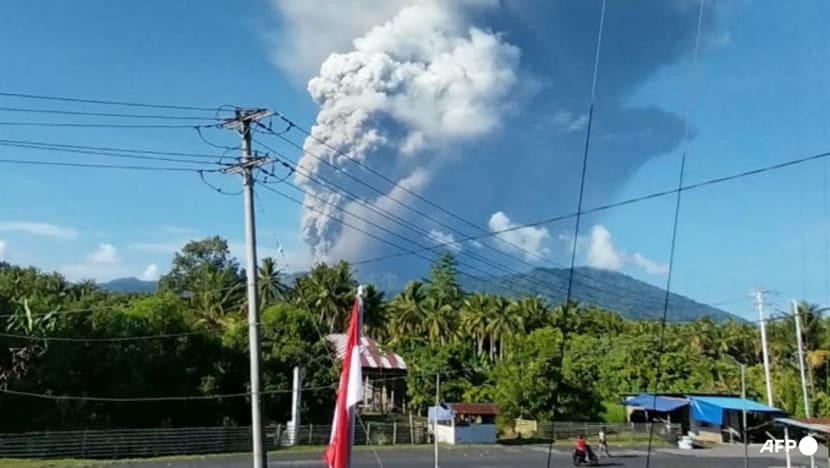
A handout picture taken and released by Indonesias Geological Agency on May 8, 2026, shows smoke rising from the eruption of Mount Dukono as seen from Tobelo, North Maluku. (Photo: AFP/Indonesia's Geological Agency)
SINGAPORE: Every year, Mr Jeremy Tong takes expedition groups to some of Southeast Asias most popular mountains among them Mount Kerinci, the highest active volcano in Southeast Asia and one of Sumatras most active.
The draw is beauty and a sense of adventure, said Mr Tong, who runs a travel expedition company, JTrace, and has led expeditions for over 12 years.
When you climb the volcano, there's this sense of humility and respect for nature, because the mountain is alive, the 36-year-old said.
The recent deadly eruption at Indonesias Mount Dukono has put a spotlight on the risks of hiking active volcanoes. Experts told CNA that while such expeditions carry certain dangers, hikers can take precautions.
Don't be afraid of volcanoes. Not all volcanoes are the same. Some volcanoes more active, some volcanoes less active always do your research, do your homework, ask questions, said Mr Tong.
THE RISKS OF AN ACTIVE VOLCANO
One of the most underestimated risks hikers face on active volcanoes is the unpredictability of eruptions, said Dr Mirzam Abdurrachman, who works at the Petrology, Volcanology and Geochemistry Research Group at Bandung Institute of Technology in Indonesia.
Mount Dukono has been erupting almost continuously since 1933, yet many hikers underestimate how quickly conditions can change, he said.
Fridays eruption killed three hikers, including two Singaporeans. Seven other Singaporeans were among the 17 people who survived.
Volcanic hazards extend well beyond lava flows, Dr Abdurrachman said. Ash inhalation, falling rocks, crater explosions and lahars volcanic mudflows triggered by rain are often more dangerous for hikers.
Some active volcanoes are more dangerous for hikers because of their eruption style, frequency, gas emissions and crater accessibility, he added.
The death toll from active volcanoes has at times been severe. In 2023, Indonesia's Mount Marapi erupted, killing 23 hikers. In December 2019, an eruption on Whakaari Island in New Zealand killed 22 people, many of them tourists.
Some types of eruptions are especially dangerous because they occur with little warning.
Phreatic eruptions short-lived blasts of steam can catch hikers off guard, said Associate Professor Benoit Taisne from the Asian School of the Environment and Earth Observatory of Singapore at Nanyang Technological University. A phreatic explosion at Japan's Mount Ontake killed 63 hikers in 2014.
Volcanoes with small daily explosions that can be observed from a safe distance may pose less risk, he added.
You won't be close enough to be at risk because you know it's erupting, he said.
Volcanoes showing no signs of unrest or pending activity also tend to be safe for hikers.
Under the Global Volcanism Program's definition volcanoes that have erupted in the last 10,000 years active volcanoes can be safe to visit, depending on the information that relevant agencies hold, he said.
VOLCANO FORECASTING
The best precaution is to check official monitoring sources before making the hike, said Assoc Prof Taisne.
As soon as the alert level rises above the lowest, hikers should consult the local authority's website for guidance. In Indonesia, these include the geohazard monitoring platform MAGMA and the Volcanological Survey of Indonesia website.
Dr Abdurrachman, who is also secretary-general of the Indonesian Geologists Association, said hikers should understand that these risk assessments are scientific hazard evaluations, not suggestions.
A Level II or higher alert status does not mean the volcano is safe for tourism; it means volcanic activity is elevated and dangerous areas must be avoided, he said.
While volcano forecasting has improved significantly over recent decades, pinpointing the exact timing and scale of an eruption remains extremely challenging, Assoc Prof Taisne said.
Scientists rely on a combination of monitoring tools, including seismic activity, ground deformation, gas emissions and thermal observations, to identify changes within the volcanic system.
Changes can occur on different timescales, from short hours to long, days or months, he said.
For those already en route to a volcano, warning signs include visible degassing, an intensifying smell of sulphur or vibrations in the ground.
Mr Vivek Vaidya, founder of Trekkers@Heart, said expedition groups should check with local guides for any adverse signs.
A common mistake trekkers make is hiring unqualified local guides to save a few dollars, he said. Experienced, knowledgeable local guides can pick up subtle changes in weather, smells or sounds that may signal danger.
PREPARATION AND MINDSET
Safety precautions begin well before the trip, expedition guides said. Mr Vaidya's company runs monthly hikes in Malaysia and weekly hikes in Singapore across different terrains to build real-life trekking experience.
We insist that trekkers take fitness preparation, mental preparation and gear preparation very seriously, he said.
Ms Joanne Soo, 55, founder of Ace Adventure Expeditions, agreed. In 30 years of trekking, she has led trips to active volcanoes including Mount Rinjani in Indonesia and Mount Fuji in Japan. She advises hikers not to rely solely on their organisers for information.
Any mountain trip is always a risk. So it's important that we as individuals understand the risk we take on, and how ready are we to actually attempt it, she said.
Importantly, hikers must be prepared to turn back if conditions change, said Mr Tong.
People say, Oh, we're only here for a while. We have never been here before. We want to attempt the summit because what are the chances of coming back again? That needs to be removed, he said.
If a restricted zone has been issued, then it needs to be adhered to at all costs.
*Devashish Govind Tokekar*
*VANDE Bharat live tv news Nagpur*
Editor/Reporter/Journalist
RNI:- MPBIL/25/A1465
*Indian Council of press,Nagpur*
Journalist Cell
*All India Media Association
Nagpur*
*District President*
*Delhi Crime Press*
RNI NO : DELHIN/2005/15378
AD.Associate /Reporter
*INDIAN PRESS UNION*
District Reporter
Contact no.
9422428110/9146095536
Head office:- plot no 18/19, flat no. 201,Harmony emporise, Payal -pallavi society new Manish Nagar somalwada nagpur-440015