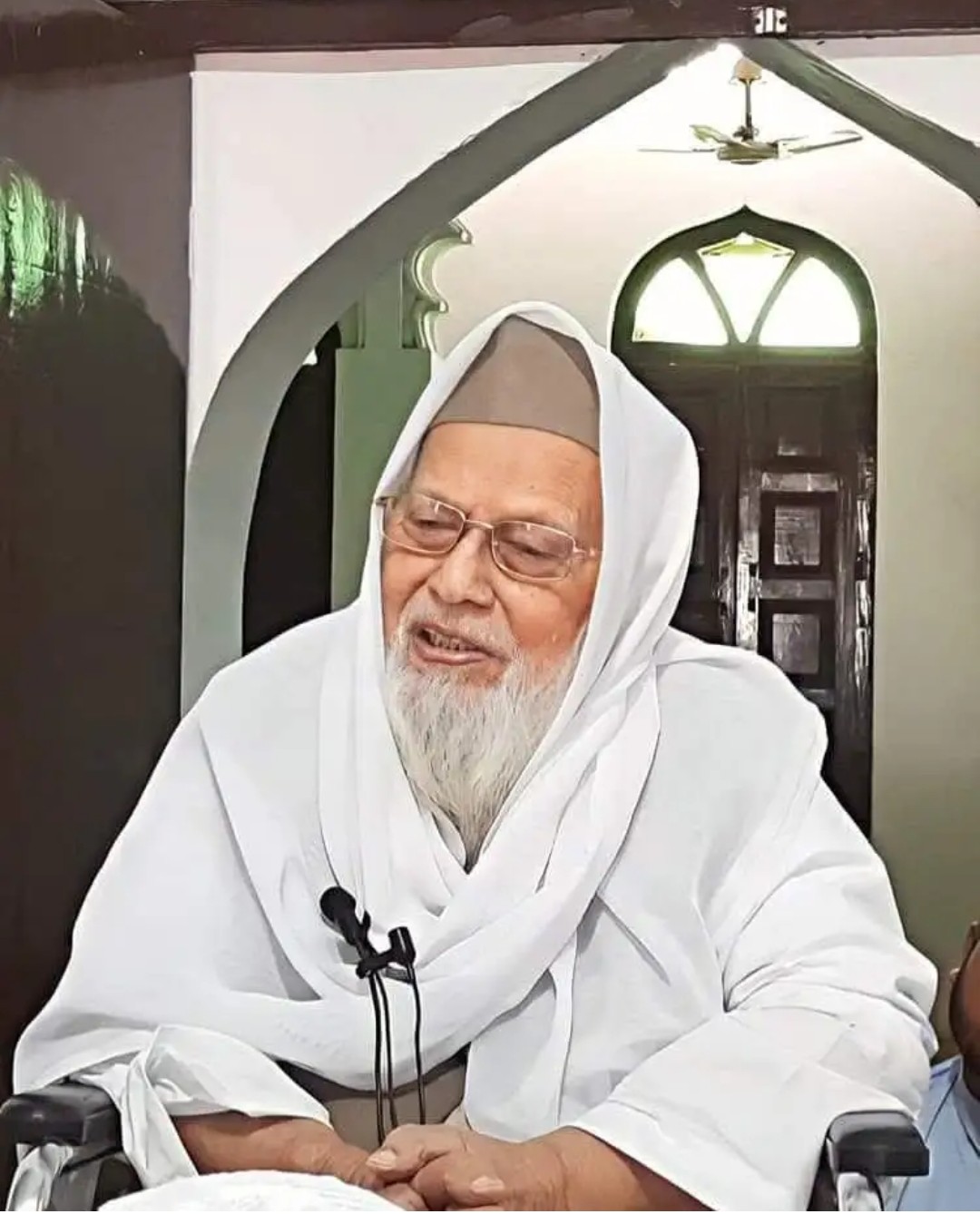
The Beacon of Nadwa: An In-Depth Study of Hazrat Maulana Syed Mohammad Rabey Hasani Nadwi (RA)
The Beacon of Nadwa: An In-Depth Study of Hazrat Maulana Syed Mohammad Rabey Hasani Nadwi (RA)
As we mark the third year since the passing of this legendary Islamic scholar, it becomes clear that the history of modern Indian Islamic scholarship remains incomplete without the towering presence of Hazrat Maulana Syed Mohammad Rabey Hasani Nadwi (RA). A scholar of international repute, a linguist of exceptional caliber, and a tireless advocate for human dignity, his life (1929–2023) served as a bridge between the classical traditions of the past and the complex realities of the 21st century.
His leadership was never merely administrative; it was a moral lighthouse that guided millions through the turbulent waters of communal and social change.
Intellectual Pedigree and Early Formation
Maulana Rabey was born on October 29, 1929, into a family synonymous with spiritual and intellectual reform in Raebareli, Uttar Pradesh. He was the nephew and protégé of the legendary Mufakkir-e-Islam (Thinker of Islam), Hazrat Maulana Syed Abul Hasan Ali Nadwi (Ali Mian RA). This relationship proved pivotal. Under Ali Mian’s shadow, Maulana Rabey did not merely learn texts—he imbibed a worldview that prioritized the "Message of Humanity" (Payam-e-Insaniyat) above all else.
After graduating from Darul Uloom Nadwatul Ulama in 1948, he refined his knowledge of jurisprudence and theology at Darul Uloom Deoband, followed by a period of rigorous study in the Hejaz. This international exposure enabled him to master Arabic not simply as a liturgical language, but as a living, breathing medium of literature and diplomacy.
The Architect of Nadwatul Ulama
Maulana Rabey’s association with Nadwatul Ulama spanned over seventy years. His journey from a young Assistant Professor in 1952 to the Chancellor in 2000 reflects a life of steady, dedicated service.
Key Institutional Milestones:
· Literary Reform: As Head of the Arabic Department and later Dean, he revolutionized the teaching of Arabic in India, emphasizing literary nuance and modern application.
· Administrative Stability: After assuming the mantle of Chancellor following his uncle’s passing in 2000, he ensured that the institution remained a center for "Moderate Islam," steering clear of both isolationism and over‑secularization.
Global Leadership and Jurisprudence
His influence extended far beyond the gates of Lucknow. As President of the All India Muslim Personal Law Board (AIMPLB) from 2002 until his demise, he served as the primary spokesperson for the legal and religious rights of Indian Muslims.
On the global stage, his roles were equally prestigious:
· Vice President of the Aalami Rabita Adab-e-Islami, Riyadh
· Founding Member of the Muslim World League (Rabitat al-Alam al-Islami), Makkah
· Patron of the Islamic Fiqh Academy of India
In these capacities, he represented the Indian Muslim identity with a characteristic blend of firmness in principle and gentleness in delivery.
A Literary Giant: The Pen as a Tool for Harmony
Maulana Rabey was a prolific author, contributing significantly to both Urdu and Arabic literature. His works are distinguished by clarity, historical depth, and an absence of polemics.
Notable Work: Jazirat al-'Arab – This seminal work on Arabian geography remains a masterclass in Urdu scholarship, seamlessly blending physical geography with historical and spiritual significance.
His writings on the history of Arabic literature have become essential curricula for students across the subcontinent, ensuring that the intellectual link between Indian scholars and the Arab world remained robust.
The Philosophy of Payam-e-Insaniyat
Perhaps his most enduring legacy is his commitment to interfaith harmony. Maulana Rabey did not believe in dialogue for the sake of appearances; he believed in it as a divine mandate. Through the All India Payam-e-Insaniyat Forum, he reached out to leaders of all faiths.
At a time when communal rhetoric often dominated the headlines, Maulana Rabey spoke the language of patience (Sabr) and empathy. He viewed India’s diversity not as a challenge to be overcome, but as a strength to be nurtured. As Founder Patron of the All India Muslim Intellectual Society, he encouraged engaging with the modern world through intellectual rigor and ethical integrity.
Conclusion: An Eternal Legacy
The passing of Maulana Rabey on April 13, 2023, was not merely the loss of a scholar; it marked the closing of a chapter on a particular style of leadership—one characterized by humility, profound erudition, and an unwavering commitment to peace.
He left behind a community more intellectually grounded and an institutional framework that continues to champion the values of moderation. To follow his path is to embrace a vision of India where scholarship serves humanity and faith manifests as service.
— Dr. Ammar Anis Nagrami
General Secretary, All India Muslim Intellectual Society
📞 9161002638