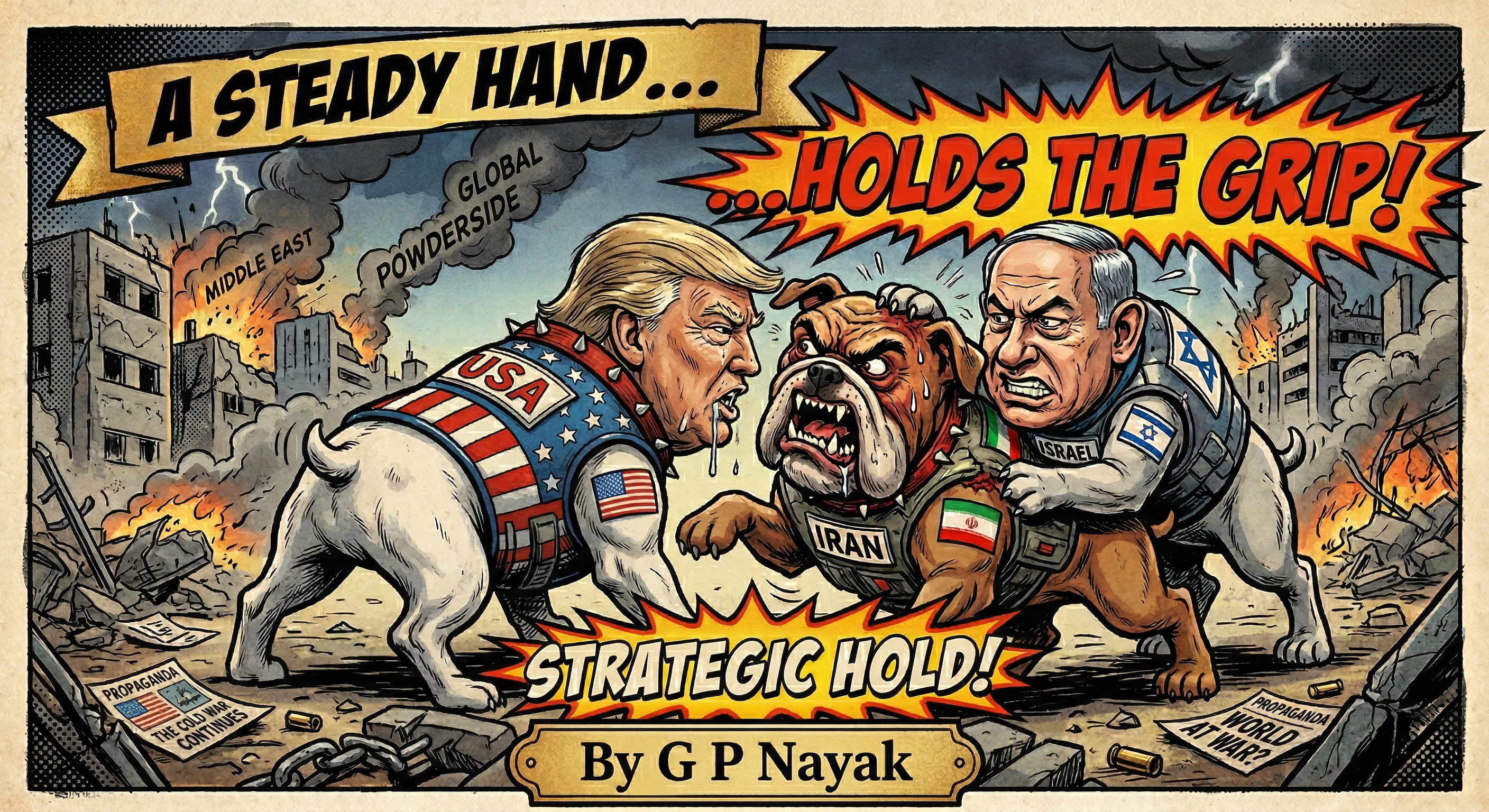
Strategic Dilemmas and the Nuclear Shadow in the Middle East
GLOBAL CAPITALS — As of April 7, 2026, the geopolitical landscape has shifted from traditional "shadow boxing" to a high-octane regional conflagration. The "Operation Epic Fury," initiated on February 28, has transformed the Middle East into a theater of unprecedented volatility. While the world watches the "Big Shots" navigate this explosive chessboard, the internal machinery of global power is facing a dilemma that could redefine the 21st century.
+1
The Vivacity of a Modern Firestorm
This is no longer a localized conflict; it is a multi-front regional war characterized by "Strategic Vivacity"—a rapid, pulsing escalation that involves cyber-warfare, drone swarms, and high-altitude missile exchanges. The intensity is driven by the sheer stakes: regime survival in Tehran versus the existential security of Israel and the global dominance of the United States. With the Strait of Hormuz effectively throttled, the war has moved from the trenches to the gas pumps and grocery stores of the world, proving that in 2026, a "regional" war has an immediate global heartbeat.
The American Dilemma: To Bow or to Break?
The United States, under the current administration, finds itself in a profound strategic paradox. Having initiated strikes to "induce regime change" and dismantle nuclear programs, the U.S. is now grappling with the "Quagmire of Victory." * The Stalemate: While U.S. and Israeli forces have successfully degraded much of Iran’s conventional navy and air defense, the Iranian nation has not surrendered.
The Dilemma: If the U.S. withdraws now, it risks a "Strategic Failure" where a wounded Iran races toward a nuclear finish line to ensure it is never attacked again. If the U.S. escalates—specifically if it follows through on threats to strike energy sites by the April 6 deadline—it risks pulling China and Russia directly into the fray to protect their Eurasian interests.
The Nuclear Question: What if the Unthinkable Happens?
The most harrowing "What If" involves the use of nuclear weapons. Analysts warn that we are currently in a "Breakout Window."
Direct Exchange: A tactical nuclear strike would likely trigger a "Chain Reaction" across the region. Unlike the Cold War’s "Mutually Assured Destruction" (MAD), a Middle Eastern nuclear exchange could be asymmetrical, leading to immediate environmental collapse in the Levant and the Gulf.
Global Fall-out: Beyond the physical radiation, a nuclear detonation would shatter the "Nuclear Taboo" that has held since 1945. This would likely lead to a rapid proliferation of weapons in countries like Saudi Arabia and Turkey, ending the era of global non-proliferation.
Economic Zero: The global financial system is not built to survive a nuclear event in the world’s primary energy hub. We would be looking at a total halt in global trade and a collapse of the petrodollar architecture.
What Happens Next?
The world stands at a crossroads. The probable actions from the U.S. involve a "Consolidation Phase"—using special forces for high-risk "boots on the ground" raids to neutralize highly enriched uranium (HEU) before a peace deal can even be discussed. However, as the "American Dog" holds its grip, the pressure from the international community and the risk of a "World War Scenario" may force a pivot toward a bitter, high-stakes diplomacy.
"In this war of titans, the bite is deep, and the grip is steady. But when the dust settles, the question remains: will there be a world left to lead?"