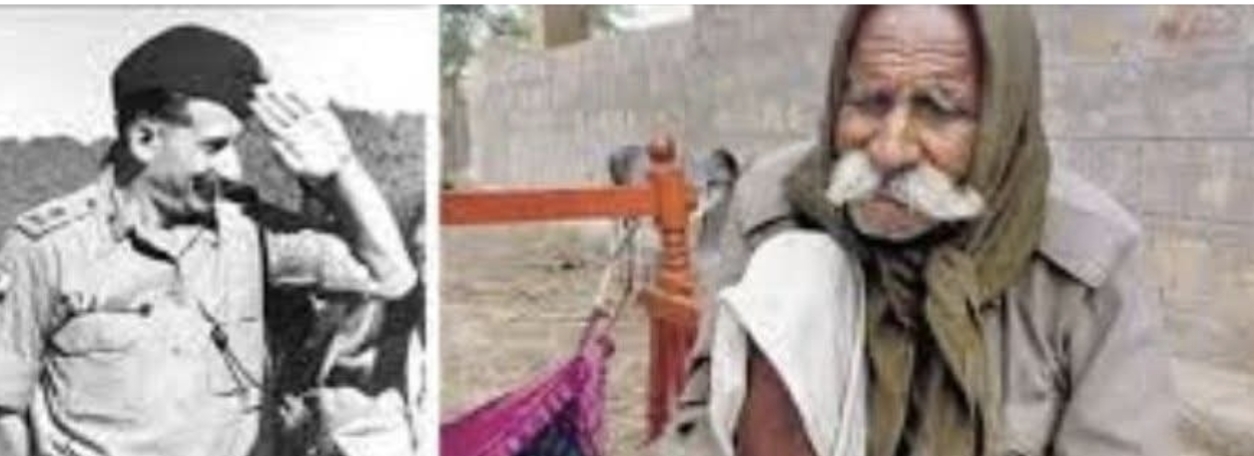
In the silent desert of the #RannOfKutch
India’s most powerful weapon was once not a drone, not a satellite, not a radar screen.
It was a barefoot camel herder.
His name was #RanchodasPagi.
The locals simply called him Pagi — a man who could read the desert like a living map, decoding stories written in sand and footprints.
🇮🇳 1965 War
After the Indian Army captured the #Vidhot post, they had no clear idea of Pakistani troop movements. Pagi studied camel tracks in the sand and made a startling observation:
“These camels weren’t carrying riders. They were carrying supplies.
The enemy force is nearly 1,200 strong.”
He was right.
From that day on, the Indian Army trusted the desert — through Pagi’s eyes.
🇮🇳 1971 War — The Unthinkable Feat
India planned a surprise armoured attack on #Nagarpakrar.
The route was a death trap — heavily mined.
Pagi was nearly 70 years old.
Yet he walked ahead of fully armoured tanks, detecting buried landmines by observing the faintest disturbances in the sand.
For 12 hours, through pitch darkness, he guided Indian tanks safely across the minefield.
At dawn, Indian armoured columns appeared where Pakistan never expected them.
The post fell with almost no resistance.
🫡 Honour Earned
Later, Field Marshal #SamManekshaw personally embraced Pagi and flew him over the battlefield — an honour rarely given to any civilian.
Pagi passed away in 2013, at the age of 112.
🌍 Legacy
Today, borders are guarded by satellites, sensors, and surveillance systems.
But once, when technology fell short,
a quiet old man who read footprints in sand was India’s greatest intelligence asset.
Salute to #RanchodasPagi —
He showed a nation the path to victory, one footprint at a time. 🇮🇳