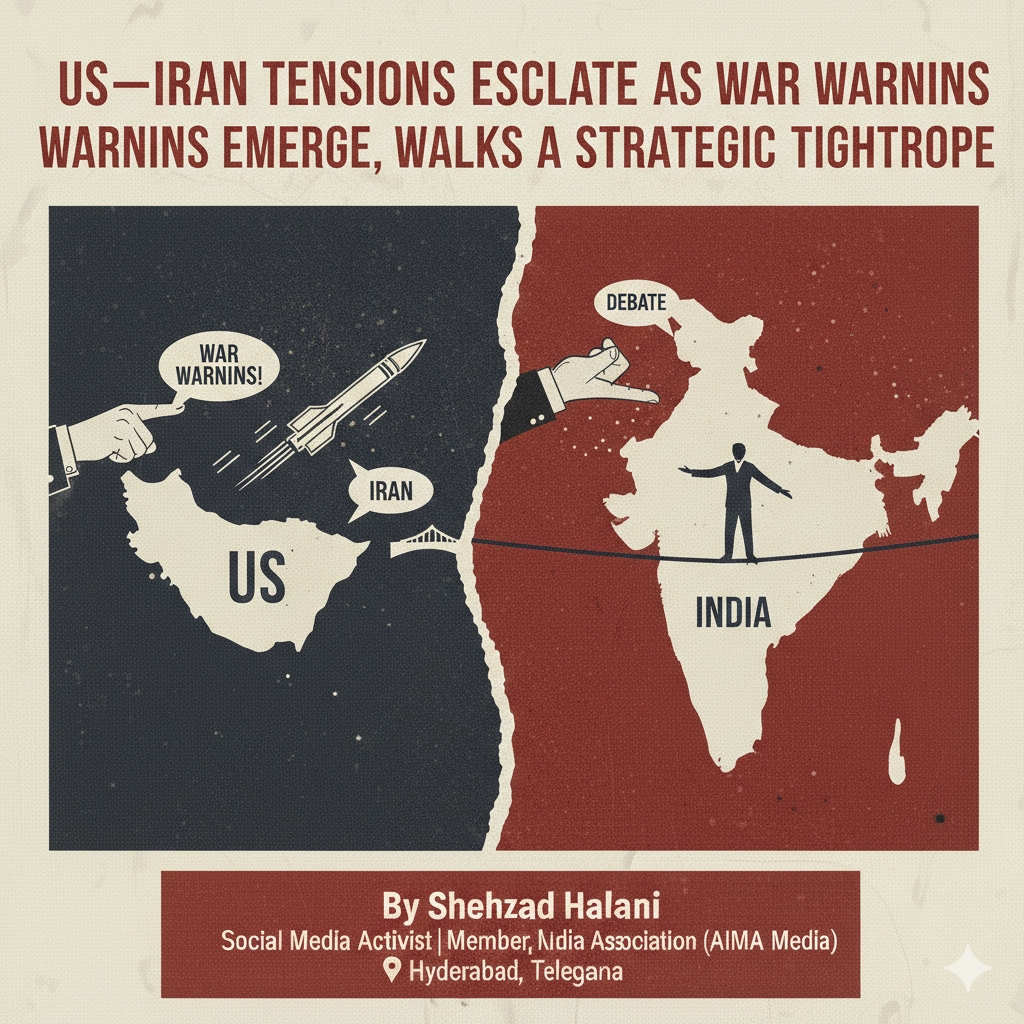
US–Iran Tensions Escalate as War Warnings Emerge, India Walks a Strategic Tightrope
Tensions between the United States and Iran have sharply escalated after Tehran warned of an “all-out war” if Washington initiates any military action. The warning follows a video statement by former US President Donald Trump, in which he threatened Iran with an “armada of warships”, reigniting fears of conflict in West Asia.
Trump also claimed that his direct intervention prevented the execution of 700–800 Iranian protestors, asserting that Iran cancelled public hangings after his warnings. According to Trump, the demonstrators were protesting against the Iranian government, and US pressure forced Tehran to step back from what he described as a mass execution.
Iran Pushes Back, Rejects US Pressure
Iranian officials have strongly rejected Trump’s narrative, accusing Washington of psychological warfare and political intimidation. Tehran has made it clear that any direct US strike would trigger a full-scale regional response, potentially destabilising the Middle East and impacting global energy markets.
The rhetoric marks a dangerous phase in US–Iran relations, already strained by sanctions, military posturing in the Gulf, and proxy conflicts across the region.
India’s UN Vote Sends a Signal
Amid rising tensions, India voted “No” at the UN Human Rights Council on a resolution condemning Iran’s crackdown on civilians. The decision has been interpreted as a signal of India’s growing discomfort with selective Western pressure tactics and an assertion of strategic autonomy in foreign policy.
New Delhi has traditionally avoided taking rigid positions in US-Iran disputes, preferring dialogue and regional stability over confrontation.
Iran Reaches Out to India
In a significant diplomatic gesture, Iran’s Supreme Leader’s representative in India highlighted the 3,000-year-old civilizational ties between the two nations. Iran expressed hope that India would continue cooperation on the strategically important Chabahar Port project, which provides India access to Afghanistan and Central Asia while bypassing Pakistan.
For India, Chabahar remains a key pillar of its regional connectivity and energy security strategy.
Possible US Military Scenarios
According to assessments cited from strategic think tanks like the Atlantic Council, potential US actions against Iran could include:
Symbolic military strikes near Tehran
Attacks on Iran’s internal security infrastructure
Cyber warfare targeting critical systems
Economic strikes on oil depots, ports, and trade routes
The most extreme and destabilising scenario discussed is an attempt to remove Iran’s Supreme Leader, a move analysts warn could plunge the region into prolonged conflict.
A Fragile Moment for Global Stability
The escalating war of words highlights the unpredictability of US foreign policy, particularly under Trump’s confrontational style. Any miscalculation could have consequences far beyond Iran and the US, drawing in regional powers and affecting global trade and energy flows.
For India, the challenge lies in balancing relations with Washington while safeguarding long-standing ties with Tehran, all while ensuring stability in a region vital to its economic and strategic interests.
As tensions rise, diplomacy — not brinkmanship — remains the only viable path to prevent another major conflict in an already volatile region.