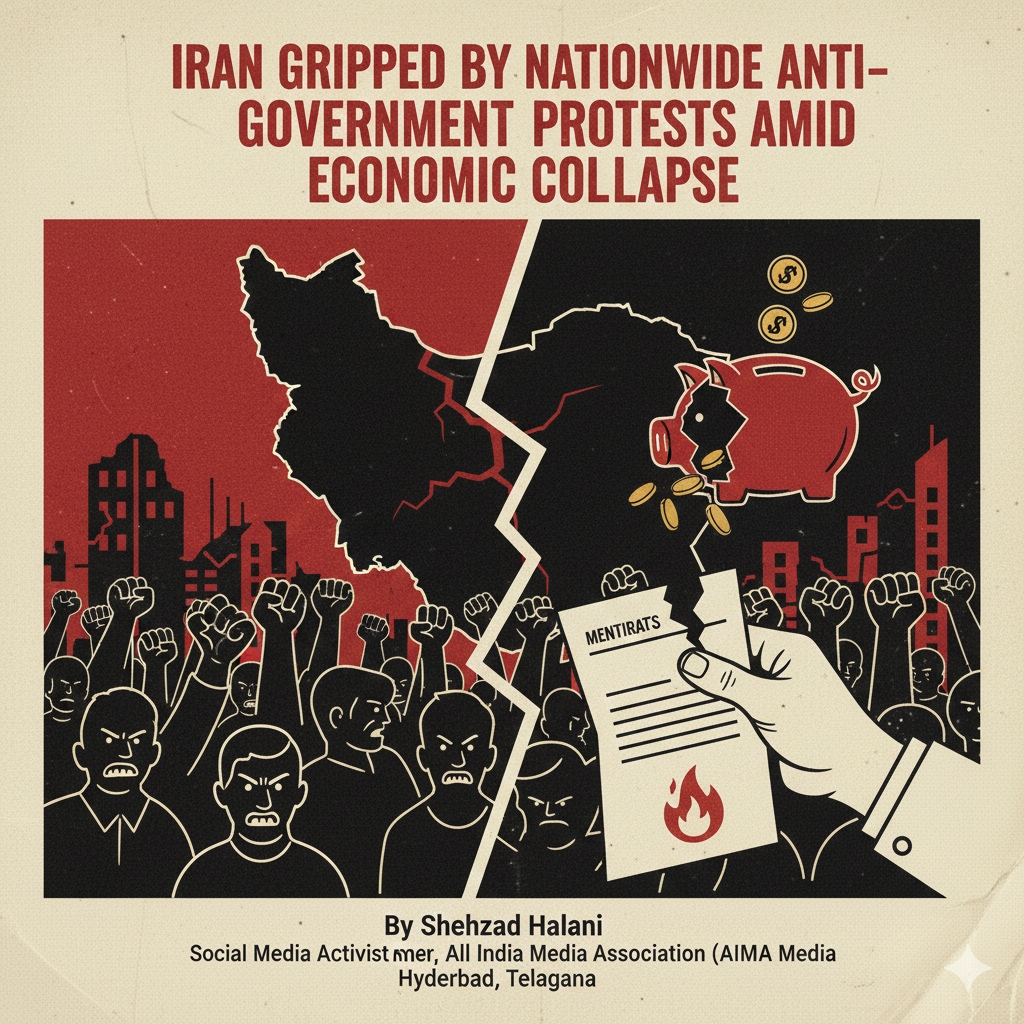
Iran Gripped by Nationwide Anti-Government Protests Amid Economic Collapse
Iran is witnessing one of its most intense waves of anti-government protests in recent years, as demonstrations that began in late December 2025 continue to spread across Tehran and several major cities. Women have emerged at the forefront of the unrest, with viral images showing protesters burning photographs of Supreme Leader Ayatollah Ali Khamenei to light cigarettes, a powerful symbol of defiance against clerical rule.
The protests have brought parts of the country to a standstill and are being driven primarily by severe economic distress. Iran is facing hyperinflation estimated at around 42%, while the national currency, the rial, has plunged to nearly 1.455 million per US dollar as of January 11, 2026. The economic collapse has eroded savings, devastated purchasing power, and pushed an estimated 30% of the population into absolute poverty.
Economic Hardship Fuels Public Anger
Rising food prices have played a critical role in triggering unrest, with costs reportedly increasing by 72% during 2025 alone. The middle class has been hit particularly hard, leading to widespread frustration and anger against the ruling establishment.
Protest slogans in cities such as Mashhad and Tehran have openly expressed support for Reza Pahlavi, son of Iran’s last shah, reflecting growing rejection of the current clerical system. Alongside economic grievances, women continue to protest mandatory hijab laws, echoing earlier movements sparked by the death of Mahsa Amini.
Crackdown and Internet Blackout
Iranian authorities have responded with force, branding protesters as “enemies of God” and threatening severe punishments, including death sentences and public executions. Security forces, including the Islamic Revolutionary Guard Corps (IRGC), are accused of using lethal force to suppress demonstrations.
Since early January, the government has imposed a near-total internet shutdown, described as the worst in Iran’s history, limiting the flow of information and obscuring the scale of the crackdown. Human rights groups report over 100 deaths nationwide and more than 2,600 arrests, with unverified claims suggesting that over 200 people may have been killed in Tehran alone on some nights. Hospitals are reportedly overwhelmed as casualties rise.
International Reactions and Rising Tensions
International concern has intensified as the situation deteriorates. Former US President Donald Trump issued a warning to Iran’s leadership against killing protesters, stating that the United States is “locked and loaded” and prepared to respond forcefully, potentially through airstrikes without deploying ground troops.
Meanwhile, Reza Pahlavi has called for coordinated nationwide protests, further energizing demonstrators and amplifying chants calling for systemic change.
As Iran remains under lockdown and information restrictions, the true scale of the unrest and the human cost may only emerge in the coming weeks. The situation continues to evolve, with significant implications for regional stability and global geopolitics.