At 64, Chand Nizami is beginning a new chapter. Nizami Bandhu qawwali
At 64, Chand Nizami is beginning a new chapter. After performing for more than two decades with his nephews Shadab and Sohrab as part of the celebrated Nizami Bandhu qawwali group, the veteran qawwal says he will now perform separately. “I’ll no longer be seen with my nephews,” he says. “I want to start new innings.” Plus, his three sons have grown into young men, and he wants to sing with them instead. He describes his sons as pioneers in “techno qawwali.”
The decision marks a significant shift in the world of qawwali at Delhi’s Hazrat Nizamuddin Dargah, among the most important centres of Sufism. Qawwali, the music of the Sufi tradition, has been performed in the Central Delhi shrine for 750 years as an offering of prayer. Chand himself lives in a house just beside the Dargah, it is virtually within the shrine’s premises.
Actually the Dargah has eight hereditary qawwali groups, Nizami Bandhu being among the most renowned. And Chand happens to be the most recognisable face of India’s contemporary qawwali scene, especially after his singing appearances in scores of Hindi films, most memorably in the blockbuster qawwali “Kun Faya Kun” from Rockstar, filmed in the same Dargah. The song commands almost devotional status among visitors to the Dargah. Many arrive hoping to witness Chand perform the same song live, even though the playback in the film was sung by AR Rahman.
That said, Chand doesn’t need the dazzle of cinema to cream up his reputation. He is a magnetic performer, bearing a voice that combines powerful resonance with emotional intimacy. During performances, he swiftly senses the mood of his listeners and lingers over particularly heart-tugging lyrics, repeating them in his persuasive style. The qawwali tradition itself encourages such repetition to heighten spiritual excitement.
For years, Chand would be seen seated between his two nephews, singing in unison through long evenings at shrines, festivals, auditoriums, clubs, restaurants (hosting weekly “Sufi nights”), and also private parties. “We have performed at Kamani Auditorium, Bharat Mandapam, Siri Fort Auditorium,” Chand says. “We have travelled to California, Washington, New York…” Among the family heirlooms is a leather-bound edition of Hafiz’s verses, presented to Chand by Iran’s then president, Mahmoud Ahmadinejad, when he and his two nephews performed in Tehran at the Nowruz festival.
Indeed, the trio had come to be seen as inseparable; they were filmed jointly in the Rockstar song. But time passes, bonds evolve. Chand views the parting as a natural progression in an expanding family, speaking warmly of his two nephews.
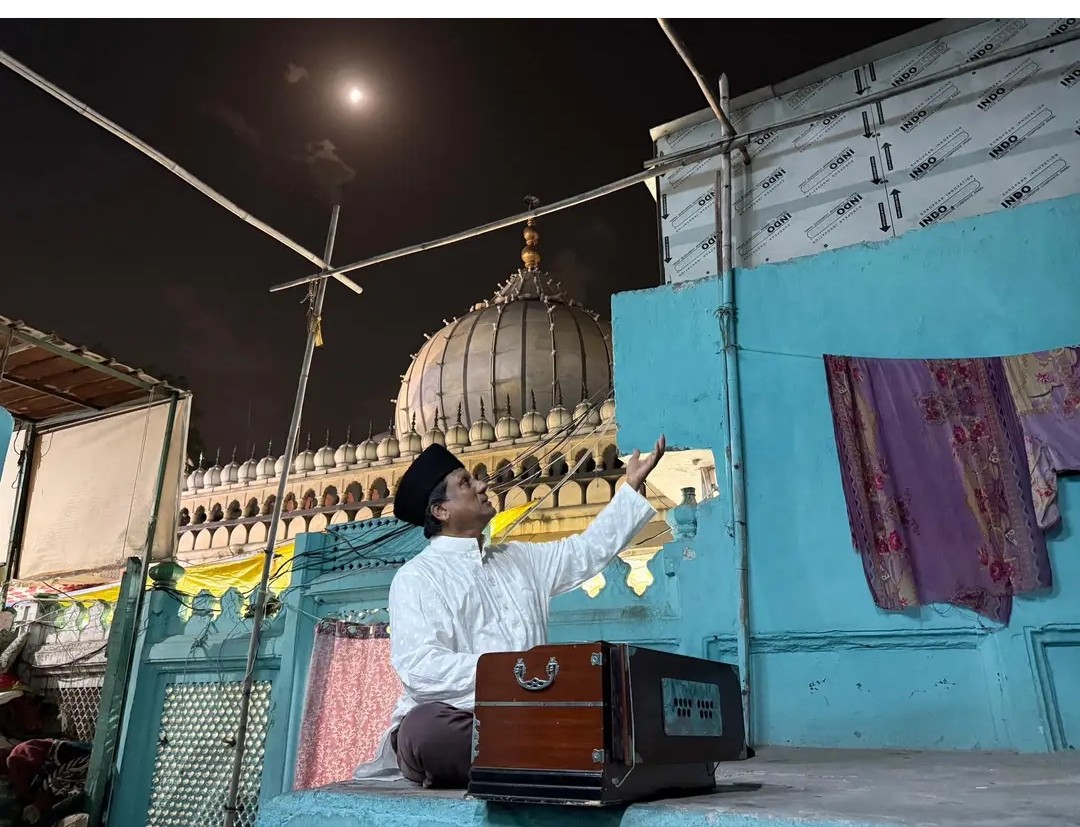
Late this sweltering summer night, Chand Qawwal is sitting with his harmonium in the courtyard of his home, the Dargah’s marble dome looming behind him. Overhead, the other chand, the distant moon, is glowing in the sky. Chand now instinctively raises his arm, and begins to offer a qawwali. See photo.After performing for more than two decades with his nephews Shadab and Sohrab as part of the celebrated Nizami Bandhu qawwali group, the veteran qawwal says he will now perform separately. “I’ll no longer be seen with my nephews,” he says. “I want to start new innings.” Plus, his three sons have grown into young men, and he wants to sing with them instead. He describes his sons as pioneers in “techno qawwali.”
The decision marks a significant shift in the world of qawwali at Delhi’s Hazrat Nizamuddin Dargah, among the most important centres of Sufism. Qawwali, the music of the Sufi tradition, has been performed in the Central Delhi shrine for 750 years as an offering of prayer. Chand himself lives in a house just beside the Dargah, it is virtually within the shrine’s premises.
Actually the Dargah has eight hereditary qawwali groups, Nizami Bandhu being among the most renowned. And Chand happens to be the most recognisable face of India’s contemporary qawwali scene, especially after his singing appearances in scores of Hindi films, most memorably in the blockbuster qawwali “Kun Faya Kun” from Rockstar, filmed in the same Dargah. The song commands almost devotional status among visitors to the Dargah. Many arrive hoping to witness Chand perform the same song live, even though the playback in the film was sung by AR Rahman.
That said, Chand doesn’t need the dazzle of cinema to cream up his reputation. He is a magnetic performer, bearing a voice that combines powerful resonance with emotional intimacy. During performances, he swiftly senses the mood of his listeners and lingers over particularly heart-tugging lyrics, repeating them in his persuasive style. The qawwali tradition itself encourages such repetition to heighten spiritual excitement.
For years, Chand would be seen seated between his two nephews, singing in unison through long evenings at shrines, festivals, auditoriums, clubs, restaurants (hosting weekly “Sufi nights”), and also private parties. “We have performed at Kamani Auditorium, Bharat Mandapam, Siri Fort Auditorium,” Chand says. “We have travelled to California, Washington, New York…” Among the family heirlooms is a leather-bound edition of Hafiz’s verses, presented to Chand by Iran’s then president, Mahmoud Ahmadinejad, when he and his two nephews performed in Tehran at the Nowruz festival.
Indeed, the trio had come to be seen as inseparable; they were filmed jointly in the Rockstar song. But time passes, bonds evolve. Chand views the parting as a natural progression in an expanding family, speaking warmly of his two nephews.
Late this sweltering summer night, Chand Qawwal is sitting with his harmonium in the courtyard of his home, the Dargah’s marble dome looming behind him. Overhead, the other chand, the distant moon, is glowing in the sky. Chand now instinctively raises his arm, and begins to offer a qawwali.