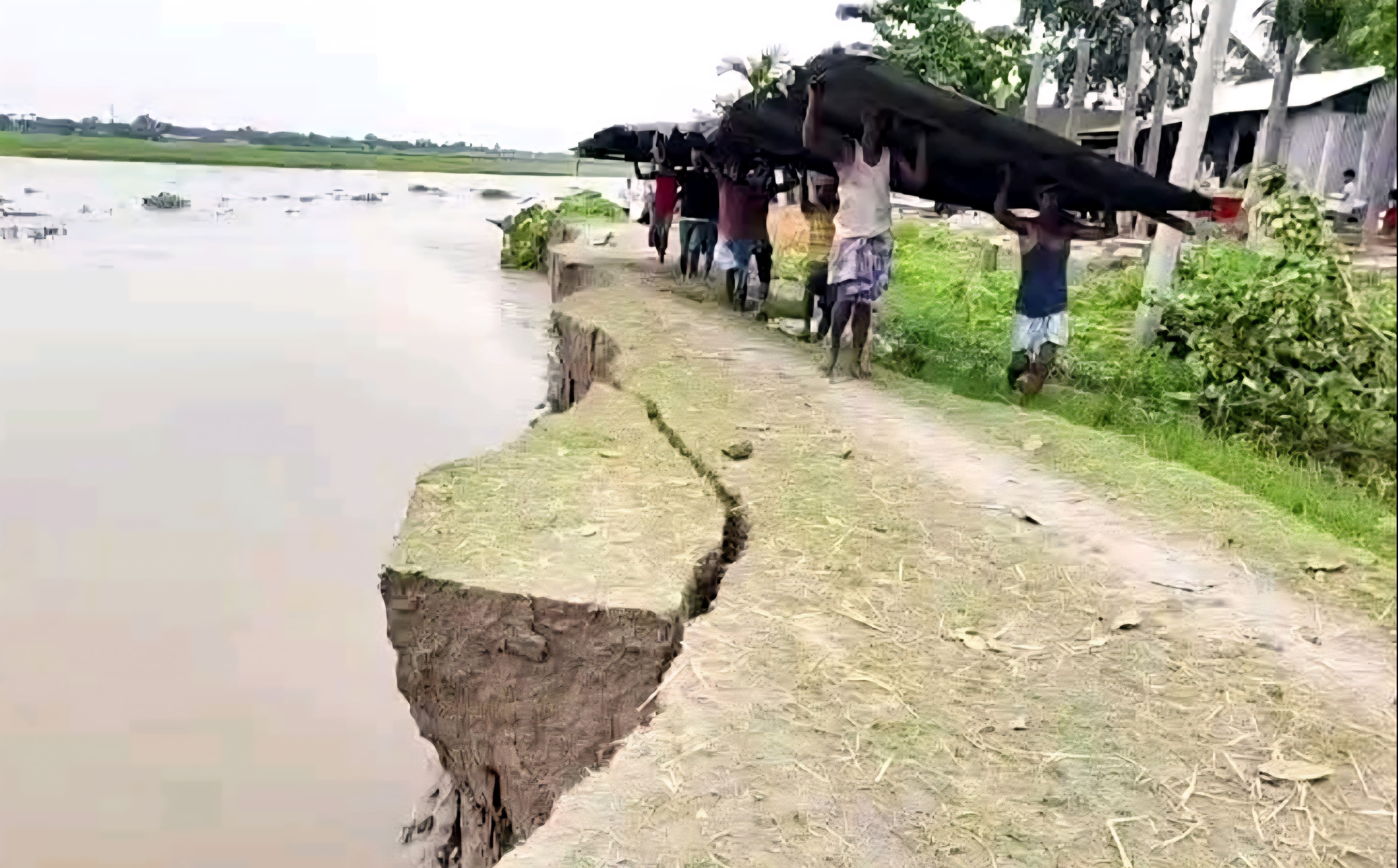
Erosion in the Map of Assam: A Silent Cry for Survival.
Erosion in the Map of Assam: A Silent Cry for Survival.
August 15, 1950. Amidst the joy of India’s Independence Day, a catastrophic act of nature forever altered the geographical and social history of Assam. A massive earthquake of 8.6 magnitude caused the bed of the Brahmaputra to rise, triggering an endless cycle of riverbank erosion. After seven decades, erosion is no longer just a natural disaster for Assam; it has escalated into an existential crisis.
The Alarming Statistics of Erosion:
According to government and research data, since 1954, approximately 4.27 lakh hectares of land in Assam have been swallowed by the Brahmaputra and its tributaries. This accounts for nearly 7.4% of the state's total land area. On average, 8,000 hectares of fertile agricultural land and human settlements vanish into the river every year. From Dhubri, Goalpara, and Barpeta in Lower Assam to Majuli, Lakhimpur, and Tinsukia in Upper Assam, not a single district is free from this curse.
Victims of Erosion and Eviction: An Inhumane Cycle:
Riverbank erosion is not merely the loss of soil; it is the beginning of a humanitarian disaster. It turns a self-reliant farmer into a pauper in an instant. Forced by the struggle for survival, these people take shelter on embankments, vacant government lands, or forest fringes. Ironically, the same government that fails to protect their land from erosion often labels them as 'encroachers' and subjects them to inhumane evictions. This cycle of erosion, landlessness, and eviction is deeply interconnected.
Violation of Fundamental Rights:
Article 21 of the Indian Constitution guarantees every citizen the 'Right to Life with Dignity.' The Supreme Court has repeatedly affirmed that the right to shelter and livelihood is an integral part of the Right to Life. However, for these 'Climate Refugees' of Assam, these fundamental rights are being blatantly violated. Evictions carried out without providing alternative rehabilitation force individuals back into refugee-like conditions, condemning them to an inhumane, nomadic existence.
Government Measures and Limitations:
While the Water Resources Department spends crores annually on erosion control, these measures often prove to be temporary fixes. It is unfortunate that the Central Government has yet to recognize floods and erosion as a 'National Disaster,' leading to a perennial shortage of funds required for a permanent solution.
To Save Assam, What is Required to Stop Erosion?
▶️ River Dredging: A long-term plan to scientifically remove silt and increase the depth of the riverbed.
▶️ Permanent Rehabilitation Policy: Instead of evicting erosion victims as 'encroachers,' the government must grant them rights to agricultural land and housing.
▶️ Legal Protection: Protecting the lives and livelihoods of citizens from erosion should be declared a mandatory constitutional responsibility of the government.
Conclusion:
For sons of the soil to live like refugees in their own land is a stain on a democratic society. Through public mobilization, we must compel the government to move beyond election promises and pave the way for a permanent solution that secures the land and the constitutional dignity of the erosion-affected people.
Abdul Hai
General Secretary, AIUDF