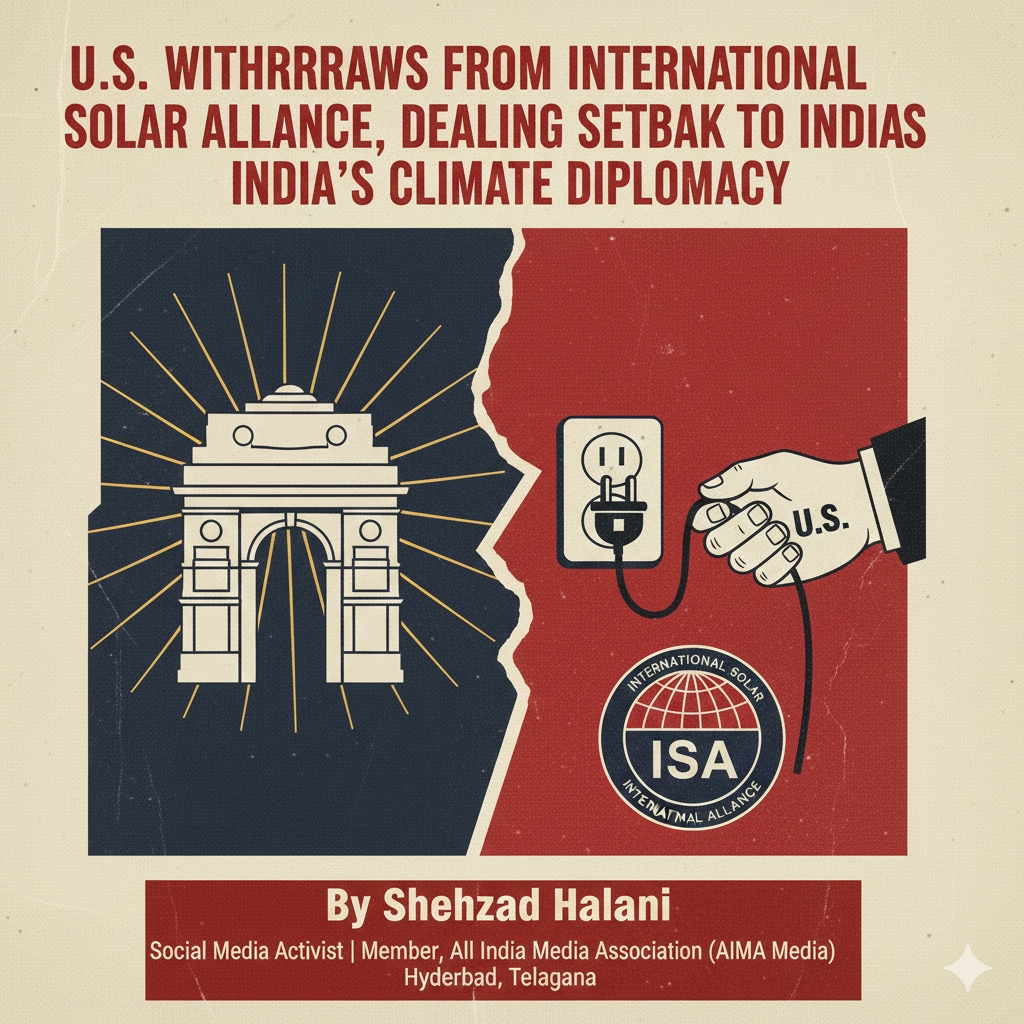
U.S. Withdraws from International Solar Alliance, Dealing Setback to India’s Climate Diplomacy
On January 7, 2026, U.S. President Donald Trump signed a sweeping memorandum directing the United States to withdraw from 66 international organizations, including India’s flagship International Solar Alliance (ISA) headquartered in Gurugram. The move marks a significant diplomatic setback for India’s global climate leadership and signals Washington’s renewed rejection of multilateral climate frameworks.
The U.S. State Department justified the withdrawals by branding the organizations as “redundant, wasteful, mismanaged, and harmful to American sovereignty.” Alongside ISA, exits include major climate bodies such as the UN Framework Convention on Climate Change (UNFCCC) and the Intergovernmental Panel on Climate Change (IPCC). Secretary of State Marco Rubio described these institutions as vehicles of “climate orthodoxy” that advance foreign agendas over U.S. national interests, calling them “anti-American.”
International Solar Alliance: India’s Flagship Initiative Hit
The International Solar Alliance was co-founded by India and France in 2015 to accelerate solar energy adoption among sunshine-rich nations. Today, ISA boasts over 120 member countries, including major economies such as Japan and Australia, positioning India as a leader in global renewable energy diplomacy.
Although the U.S. joined ISA in 2021, its financial contribution remained minimal. However, analysts say Washington’s withdrawal — accompanied by unusually harsh language describing ISA as “harmful” and “captured by actors advancing their own agendas” — risks denting the alliance’s political momentum and credibility on the global stage.
Diplomatic Fallout for New Delhi
Foreign policy analyst Prashant Dhawan termed the decision a “major blow” to India’s foreign policy and Prime Minister Narendra Modi’s solar vision, often described as India’s “Suryaputra” strategy. The move is being interpreted as a deliberate signal from Washington amid rising friction over tariffs, trade barriers, and growing skepticism within the Quad framework.
Trump administration rhetoric has reportedly mocked the India-France leadership of ISA, raising fears of a “domino effect”, where other nations may scale back participation or funding under U.S. pressure.
Broader U.S. Strategy: Force Over Forums
The withdrawals align with President Trump’s broader strategic shift toward unilateralism, coinciding with a proposed $1.5 trillion hike in the U.S. military budget. The administration has made it clear that it prefers backing the dollar and American dominance through hard power, rather than investing in multilateral climate or development institutions.
India’s Calculated Restraint
Despite the provocation, India has so far responded with restraint. However, policy circles in New Delhi note growing pressure on the government to institutionalize the Quad more decisively or recalibrate its strategic posture as U.S. actions increasingly strain bilateral goodwill.
As the global climate crisis deepens, Washington’s exit from ISA and other climate bodies raises serious questions about the future of collective climate action — and the durability of international partnerships in an era of rising nationalism.