Major Urban Expansion in Odisha: 24 New NACs Formed and 5 Towns Set for Municipal Status
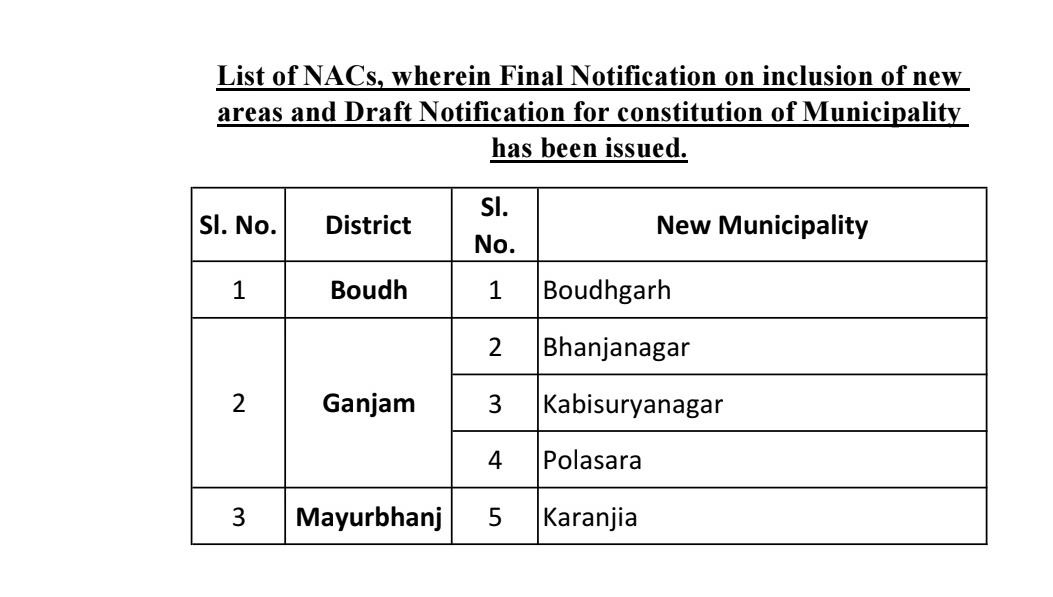
BHUBANESWAR: The Housing & Urban Development (H&UD) Department of Odisha has issued final notifications for the constitution of 24 new Notified Area Councils (NACs) and draft notifications for the upgradation of 5 existing NACs to Municipalities. This major administrative reshuffle aims to decentralize power and extend urban amenities to wider regions of the state.
Key Drivers of the Move
The government’s decision is positioned as a strategic step to foster balanced regional development, specifically targeting western, southern, and tribal districts that have historically seen slower urbanization.
Empowered Governance: The new bodies will feature elected representatives with independent budgets and planning powers, ensuring local issues are resolved locally.
Infrastructure Boost: Residents can expect significant upgrades in civic amenities, including better roads, drainage systems, safe drinking water, street lighting, and public parks.
Economic Surge: The transition is expected to attract investment, spur business activities, and generate local employment, creating an "economic momentum" in these smaller towns.
Public Apprehensions & Challenges
While the move promises modernization, it has triggered concerns among residents and experts regarding the cost of living and administrative readiness.
Cost of Living: A primary fear is the hike in property taxes and user charges that typically accompanies a transition to urban status.
Administrative Strain: There are concerns regarding implementation capacity, specifically whether smaller towns have the staffing and funding to handle rapid urbanization without straining infrastructure.
Social Impact: Critics point to potential land and boundary disputes, as well as the risk of eroding traditional livelihoods and local cultural character in favor of urbanization.
Conclusion:
As Odisha prepares for this significant urban expansion, the focus will now shift to how effectively the state can balance the promise of modern civic services with the challenges of higher costs and administrative execution.